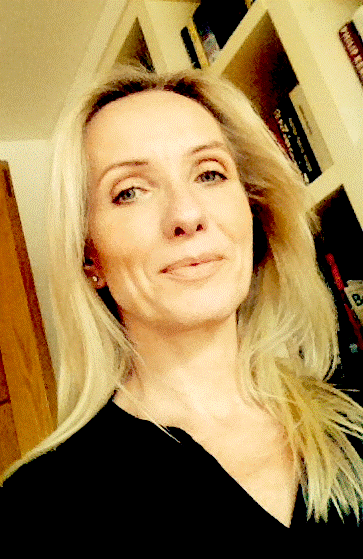
Gilda Williams: Actually, I’ll start the conversation! You were saying before that you found my book encouraging? That’s great. Encouraging in what way – did it make you want to write?
Alberta Vengrytė: It made me want to write even more, yes, and it feels like your book is standing for a friendly advice to a writer, if I could say so.
GW: Oh good. So the tone is encouraging?
AV: It definitely is. Your writing is intelligent, lucid, engaging, charged with practice-based observations and advice, which, I believe, young writers are often missing…
GW: Yes! That’s why I wrote it. Writing about art is hard, no one ever does it immediately well, intuitively. And it is usually done by the least experienced people in the art world – writing is the worst paid job in the art world, sadly – even though it’s difficult and valuable work, we art-writers and critics had never learnt how to monetize that. A lot of art writing ends up getting done by entry-level art-world members: students, junior gallery people, entry-level museum people … and they are rarely given any training in writing. It’s not really fair.

AV: And why, in your opinion, do we have this situation?
GW: It’s very simple. Starting about two hundreds years ago, there used to be only a single group of people in the art world who wrote about new art: they were called “art critics”. Artists stuck to solely making artwork in their studios; curators were invisible people working in the back room of the museums; collectors were rarely public figures. So critics did all the talking about new art – their job was to judge art, and explain the work to the public. They had no obligation to the artists, whom they often did not know, and although they might disagree among themselves critics had a unilateral voice. It was a terrible model of engagement, of course, and artists protested. Things really changed things over the course of the 60s; alongside the idea of“de-skilling” in art, writing and other tasks could potentially be “de-skilled”. The idea was that you don’t need a particular talent to write – anyone can do it – so people like Warhol would just put a mic under your chin and a text could be produced. The belle-lettres model of writing, of critics having a special style or flair for writing (which often produce some terrible purple art writing) was rejected, for good reason. Everyone in the art world writes now – if you think about it: every single figure. You either write, or you get someone to write for you. Collections,auctions (they’ve always written, actually), museums – they write huge amounts of material on all levels – galleries, students, curators – everyone writes. But we still have this idea, that it’s“de-skilled”, that you don’t actually have to learn. Artists have to write all the time, and yet they often have little idea of how to do it. It’s not that they don’t know “rules”: they don’t know how to express themselves on the page. This takes some thought and ability. Artists are never taught to write yet given very complicated tasks of representing their work, somehow, in words. Plus, their emotional investment in their art make writing about is an especially fraught, self-doubting endeavor. You can actually learn how to write about art; anyone can learn to write. I’ve been working in publishing since the 90s, for a very, very long time. When I worked at the art publisher Phaidon Press and we were making contemporary artists’ monographs, they were quite innovative at the time. It was important to us to work with very young new artists as well older – and, similarly, to commission very young new critics, as well as older. Often those young critics needed help being coached through their first major text. I had to really learn, by observing the habits of the very experienced critics whom I also worked with, the most useful advice to help a young writer raise the level of their work quickly. I worked in art publishing for 18 years, so I really got the chance to really “road-test” all the art-writing suggestions I give in How to Write about Contemporary Art. And, of course, I was always trying to become a better writer myself. Then, when I went into Academia and was working with students, they needed the very same help, if at a slightly lower level. So, I’d really practiced all those art-writing suggestions over many, many years and knew which worked. I put it all in my book: everything I’ve ever learnt over the course of approximately 25 years about how to write and how to teach people to write. I just dumped it all into my ‘how-to’ book.
AV: This is so very generous! (both laughing)
GW: They all need it! And I feel for them … my students are often struggling with their writing. They’re not happy with how their words sound but don’t know how to improve it, how to sound more like themselves. Around that time when I wrote How to Write about Contemporary Art, a lot of criticism about art-writing was growing – how pretentious it is, how impossible it is to understand, how over-complicated, how badly written. It wasn’t the ideas that are difficult, but the way they are expressed. There were very mean-spirited articles coming out, about how bad art writing was. But you know – that’s not helpful. A lot of people write in a pretentious, unclear way deliberately, that is true, but a lot of it is because they just don’t know how to write any better. Young art writers often don’t know what they are supposed to do, no one has even explained to them the difference between a press release and a review. And they are not stupid, you know? People are not stupid – you explain it to them and they get it. You still need to be smart and have ideas to write well, but knowing the basics definitely makes it easier.
AV: I have read your interview with an independent curator Bar Yerushalmi (ed. Dr. Williams’ former student) for Tohu magazine and there you are discussing, among other things, about artists who write. If you‘d let me use a quote, you say: “if you are an artist today and are inclined to write — and might be even very good at it — then you are in an excellent position”. 1 Would you please elaborate a bit on this? Why is it such an “excellent position”?
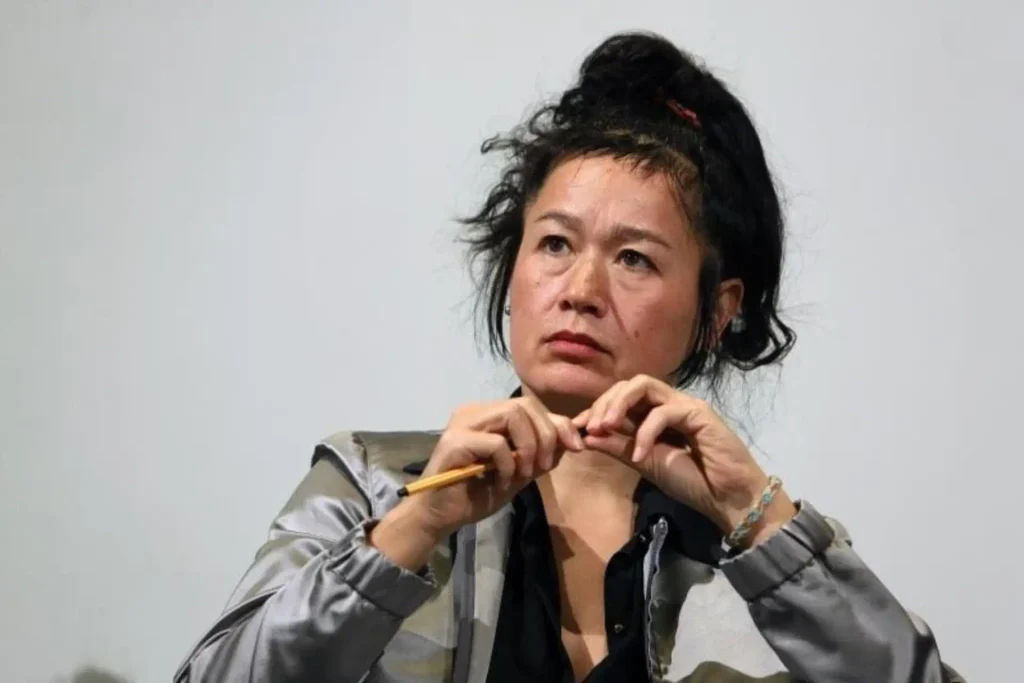
GW: Mostly for good reasons. So you’ve got to remember what I was saying before – for decades, art critics hijacked the voice for artists. The most painful example is, of course, Clement Greenberg and Jackson Pollock. Pollock said his artwork was about jazz and the stars … And then here comes Greenberg, who says “no it’s not, it’s about flatness, about painting’s special domain”, which ended up completely dominating that discourse. Pollock resented this,of course. When I work with artists and teach them how to write about their work, I always remind them: you fought for this space! If you resent writing about your art, remember that this is your space and you’ve fought for it. There are plenty of artists who have a natural inclination to writing, – historically, say, Robert Smithson, Adrian Piper, and today – Liam Gillick, Hito Steyerl – a magnificent writer. Frances Stark is fantastic, and much younger ones as well,sometimes working with ready-made texts, working with machines, all kinds of ways of generating text. We work in an environment where research-led, evidence-led artist’s practices are valued, and these kind of ideas can be well expressed in writing. But the market too depends on text – auction catalogues, art fair yearbooks … the commercial world too lives on text and writing. As does the art world broadly speaking: the academic art world, the not-for-profit art world. Writing crosses all of those platforms. So if you are an artist today and you can write really well, you have a huge advantage. People listen to artists like Steyerl, or John Kelsey, much more than the critics.
AV: Perhaps, they have the reliability of a “real artist” – of a practicing creator? Or the publicity and charisma of a famous artist also plays a certain role in accessing their audience?
GW: Yes. We trust artists as providing some kind of authentic access to the art, trust artists more than anybody – even curators, who are, of course, also trusted and are read. But artists are considered the most valued spokespeople for art, especially, of course, their own art. This seems a truism, but this wasn’t always the case, and actually I’m not convinced that artists have the most interesting things to say about their own work. They can tell you what they were thinking when they made the work, how they made it, as no one else can, of course. Also, if you think about new art media, whether it’s performance, or film – these rely on text in a way that,probably, sculpture and painting did not – although that too is debatable. But some artists are literally working with scripts, translation – working within the language and text, rather than alongside it, which is different. If an artist can write and use language fairly naturally they have, for these reasons, a huge advantage right now.
AV: Sticking to the processes of monetizing art today – in this whole ecosystem of artists, galleries, art-fairs, collectors, curators, art-students etc., where would you see an art-critic? A traditional art-critic, of whom we have discussed before, does he/she exist anymore? What is his role? And what does it say about the state of art critique itself?
GW: That‘s a really good question. It‘s something that I think about a lot, because I am an art critic. I think we have a weakening role … but we could re-invent it.
AV: That is very interesting…
GW: Art critics are the least listened to, in comparison with what artists say about their art(and about the world in general) – and that’s a good thing, there’s nothing wrong with that. By the way, the bigger tendency now is for people to work across categories: an artist who’s also a critic and a curator, for example, so we need to question those categories. But there are people like myself ‘just an art-critic’. That’s really all I do …well, I also curate sometimes.
AV: And you teach. And you write books…
GW: Oh yes, and I teach, and write books, and edit. Yes, thanks! (both laughing) But there are people who are especially involved with emerging artists, in making selections, in updating the kind of “criteria” for new art, to indicate what art is worth looking at. And I’m saying “worth” on whatever level “worth” is measured, ok? That’s what critics used to do, but now other art-world figures are much more closely involved into that practice of identifying, of first selecting and articulating what important art practices are – curators, and some very attentive gallerists, who are doing a lot of great work. Some collectors. Critics – we get there too late! We usually are responding to exhibition-making processes that have come before us. So we are just too late in the chain of events. Where I think critics could be much more useful is to collaborate with artists in articulating what they are doing in words. Where we admit, yes, there’s a skill in writing, and this skill can work in collaboration with what artists do best. Not every artist is a Teju Cole or Hito Steyerl, able to compose sterling prose as well as make art. That kind of artist/art-writer collaboration could be really, really useful. A great example of this was Andy Warhol, 50 years ago, who realized that artists had to speak for themselves – he completely understood where the art world was going, way before anyone else did on many, many levels. And he could not write –but he found a system, using collaborators (like he did with the rest of his art-making and his filmmaking), to make text work for him. He invented his own written language to represent him,and ended up producing a huge number of books using that kind of collaboration with Pat Hackett and others, taking control of the discussion around his artwork in a very meaningful way. I’m talking about the Diaries, The Philosophy of Andy Warhol, and more experimental books as well. He found a way to use language and ready-made text, transcriptions, recordings,collaborations to make language work for him. What I see among artists is that, whereas in their studio practice they are extremely open-minded and use whatever is offered to them – new technology, collaborators, readymades, anything – when they write, they suddenly go back to the XIXth Century and start artisanally trying to express themselves from scratch. They don’t understand that in their writing they have exactly the same freedom.
AV: Is an art-critic to inform the artist of this?
GW: My experience is that there are people who’ve just written a lot, who understand that language is just words … you can do whatever you want. They are not afraid of language. Whereas some artists – maybe very young artists, many whom I work with – are very afraid. The blank page make them nervous, like it’s demanding something of them they’d rather not face. Let’s use the term “art writers” instead of “art critics”– a lot of what we write is not art criticism, it’s collaborative writing, it’s creative writing. The job of judging and evaluating is very rarely the job of an art critic anymore, which is fine. I don’t know if you know this very good art writer, Chris Kraus?
AV: Oh, absolutely – I have basically discovered Semiotxt(e) with from her I Love Dick(1997).
GW: She’s wonderful, and she has a very interesting essay called Faces in her new book Social Practice (well, actually, as it is a collection of texts, mostly published before). What happens in this text is, she as an art critic invited to Berlin from the United States – she thinks – to write about an artist. And when she gets there, basically, the artist is telling her what the art is about. There’s a section in the book, in the story, where she is practically taking dictation from the artist – it’s a long quote. So there’s a big and personal introduction from Chris Kraus, about Kraus’s life and how this invitation fits in, and then there’s this long section from the artist, about the art, and then Chris Kraus comes back … What she ends up doing – and it’s a wonderful text, don’t get me wrong! It’s super interesting, and a great solution I think to what basically the artist is asking – just create a frame around the artist’s words. The artist’s request of Kraus – who remember, if among the world’s most respected art writers – isn’t just “don’t judge the work”, but“don’t even respond to my art”! Of course Kraus is a great writer and does more than literally ‘take dictation’ – or, Kraus probably ‘takes dictation’ better than almost anybody else. But mostly Kraus creates a beautiful frame around the artist’s words. It’s a brave text, but I do think at the center it is about the writer’s failure, and the resistance of non-artists, say critics, to actually have a say about art. That I find worrying, because I think that art should really be in an open system, it should be responded to in any possible way. As an art writer you don’t have to mouth the words of the artist or, indeed, of anybody else. So if we get to a place where the only truth about the artwork is the one provided by the artist – that, I think, is a deadening effect, closes the conversation down.
AV: We are meeting at Vilnius Academy of Arts doctoral department – it’s an educational institution – how do you see the role of academia today? The way that we prepare those young people – critics-to-be, artists-to-be, perhaps, let’s focus on the critics. Is it possible to provide them with the needed tools on the institutional level? What is your method, when you meet with your students at the Goldsmiths College?
GW: Oh yes, I do teach writing … you can totally learn to write. If you end up in an art academy, it’s because you are receptive, intelligent. I think what you are really teaching, when you’re teaching writing, is not just to have ideas, which is indispensable, but to show where those ideas come from in a believable way. What you are really doing is teaching someone to trace back the sources of the ideas and communicate them, so the idea can “stand up”. So, one: you have to have ideas, and two: you have to be willing to think back to how you arrived at them, or invent your idea’s lineage, through words. Any interesting writer – whether it’s a novelist or philosopher –takes you through their own thinking to make their ideas interesting and persuasive. Get rid of everything that is not actually supporting your idea. Following that line or logic can be really original – and I’m actually not talking about academic writing here, although research-based thinking, evidence-based thinking can be extremely imaginative and unexpected. Good writers are good observers, I think. They notice what words and pictures will make for persuasive evidence for an idea they want to put forward, then get those on the page. That is what you are teaching: not some kind of technique…well, there is some technique in it, but that’s the lesser teaching. The next biggest job, I think, once you have made your observations, is putting the steps in your thinking all in order.
AV: How to develop an authentic structure of your own thinking and how to reveal a well argued path of it?
GW: It really is a big part of the writer’s job – putting things in order. When I write, especially research, it’s 20% research, then 70% putting everything in order and making sure that there are no gaps in the argument, which sometimes requires more research, more thinking. The actual writing part is nothing – it takes me a day or so to write, say 2000 words, once I know my content. Then polishing of course, although I try not to over-polish. If I have my content, the writing itself is nothing – although hopefully, when I’m writing, something “else” happens, whatever magical and unexpected happens in the moment, it cannot just be mechanical. But most of it, at least for me, is really being clear about how the ideas flow, setting up a bigger idea. One problem in a lot of art writing– I’m thinking mostly about young artists here – is not just that the writing is poor, which it often is, but it does not actually have anything to say. Sometimes I’ll ask an artist who I’m teaching, “Your statement doesn’t really make any sense, what it is you want to say?”, and they’re like: “I don’t ‘want to say’ anything! I only want to get out of the job of writing this statement, and get back to my work!”(both laughing). That is never going to be an interesting text.
AV: It sounds so true. When I collaborate with my colleagues, young artists, I get the impression, that they see writing and talking about their work as a certain threat… They get to an audition and they feel like they are being exposed – made to talk.
GW: Yes. And if artists fought for their space to write, they should be able to do whatever you want with that space – including saying “I don’t want to write. I am not writing”. I’ve written a joke text that works for any artist, any artwork, any medium. It’s so stupid, so banal – just truisms about art: “My art challenges the viewer, my art asks the viewer to complete the work, my art blurs fact and fiction”, etc. And I give it to them, “Take it! If you don’t want to write, use this”.It’s terrible, idiotic writing and I’m hardly encouraging it. But I’m pointing out: “Look, if you are going to write this badly, at least don’t waste any time writing it”.
AV: That is witty! (both laughing)
GW: They get it. Maybe some people really do see my stupid paragraph and just say “I don’t care”, but it’s not a solution. Language is powerful. And it is a great chance to express yourself through words. It is so much fun … to tell stories, to make pictures with words. Just such fun –why waste it? I also tell my students, “If your text about your art, which you love, does not bring you joy, you’re doing something wrong.” You are the world’s greatest expert on your art, so you can write about it however you want. There are no rules. You should have a wonderful time writing this text – it should be a joy and a pleasure.
AV: The greatest time of your life! (both laughing)
GW: Who’s telling you to write in a way that you hate? Nobody, except for yourself. Stop telling yourself that. Read great writers, like Zadie Smith. Learn from them.
AV: Nowadays, everyone in the Art History and Theory department (@VAA) wants to write like Gilda Williams – since your book appeared in that little book-shop on the first floor of the building. Who were your own teachers?
GW: Mostly great literature. I mean, I read a lot.
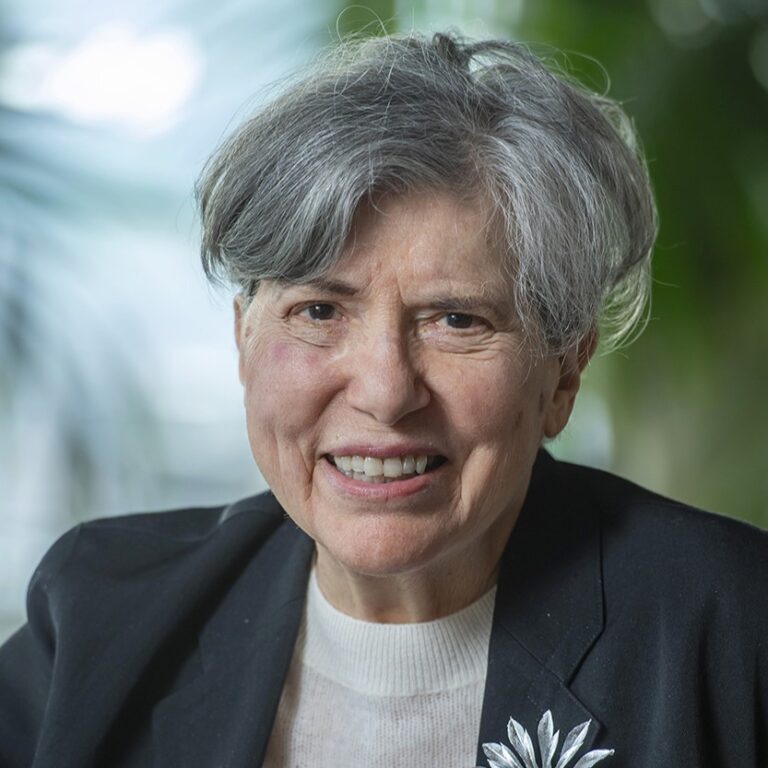
Rosalind Krauss
AV: And what do you consider to be great literature?
GW: I’ve just finished Washington Black (2018) by Esi Edugyan – amazing literature. An American Marriage (2018) by Tayari Jones – great novelist. Toni Morrison, wonderful … I mean, I read all the great books. I love it – reading’s not work for me. And also very good journalism, like David Foster Wallace. I mean, you can learn everything just from reading these writers. I don‘t read a lot of art writing. I do read it for work, but I don‘t read it for technique, or vocabulary.
AV: I assume, you don‘t really need to learn from someone‘s vocabulary? You are just too good for that… (both laughing)
GW: No, I collect vocabulary all the time. Words I would not have thought of, I collect them. I learned a lot from Rosalind Krauss – not so much for style, as I do find her style dense, but her ability to read visual information is tops. She has total faith in the artworks, and will look at them for as long as it takes, until she can articulate how they are carrying meaning for her. She’s not popular – she’s totally out of fashion, and even when she was, plenty of people criticized her, but I don’t care. You can learn a lot from Krauss’ ability to put visual information into words. I just love reading. Do you know Miranda July? She’s terrific. An artist who writes. July has an amazing way with dialogue, creating characters by the things they say. I devour contemporary fiction. I’ve mentioned Washington Black, a big sprawling novel, set in the XIXth century, about an escaped slave. Edugyan moves from psychological space to the immediate landscape, to the bigger picture, back and forth, with fantastic ability. I mean, the story is quite wonderful, but her ability to move from inside one character, what someone was thinking, to what was seen, to what other people were seeing. It’s complex, and brilliant. I read a lot – a lot – of really good literature. Like 3 or 4 hours a day, every day. Rachel Kushner is certainly worth reading, but also the old guys. I’ve read every word of Dickens. Right now though I’ve decided to stop reading white guys, listen to someone else.
AV: How do you feel about poetry?
GW: Oh … I wish I understood poetry! (both laughing) I am very embarrassed by my inability to read poetry. That is my own weakness and failure. I read Emily Dickinson, and a few poets who are meaningful to me, like John Cooper Clarke. Poetic language is so sophisticated, so condensed. It creates pictures and stories in such – such – small space. It is wonderful. But I don’t know how to do that.
AV: And what is your opinion about those, let’s say, poetic art-critique texts, which are sometimes rather vague in their manner, very emotional etc.? When someone starts their text from describing the dominant weather conditions, the surroundings, and then goes further to access art, and so somewhere in the middle of the text you realize, that they are discussing a particular piece of art, which appears to be at a certain exhibition, at the certain gallery…
GW: Wonderful. There really are writers who work that way, who get to the art eventually. Someone like Brian Dillon, who writes essays around and within artworks, it’s fantastic art writing. Laura McLean-Ferris – she is not exactly what you are talking about, but she’s very good. She can tell two stories at once. I support anything. Just to be clear – I don’t believe there is one right way to write or think about art at all. Really, anything is possible. In my opinion, people who write badly – and when I say write badly, I mean they fail to communicate – basically all write the same. Their texts fail in very similar ways: there are too many abstract terms, there is no thread through the text. Good writing is always different and surprising, whereas, bad texts all tend to be very, very similar. What I hope I did in my book is to point out what failed texts all do.
AV: I love that chapter of your book, where you say “Don’t explain a complex abstract idea with another abstract idea”…
GW: Absolutely. But also scientific writing fails for the same reason. Bad artist statements just rearrange key words, but the style is more or less uniform, equally bad and boring. Boring texts, I think, are always failed texts, because no one wants to read them. People who are communicating well with language all do it differently – the beauty and the pleasure of reading is to see how someone is writing in their own way. So there are definitely no rules at all for skilful, intelligent,creative, innovative art writing – none. In fact, break all the rules! But there are patterns for weak writing. All bad press releases sound the same, for example. So whatever options are around,would it be poetic writing, novelistic writing, memoir-writing, whatever writing – I am for it all. Once you learn what to avoid – even though sometimes people play with that, which can also be interesting – then sure, you can be indirect, you can be poetic as you called it, you can use readymade texts, spliced texts… I read a wonderful review in the LA Times by Carolina A. Miranda,she wrote this fantastic review1 of the Jeff Koons show – she had notseen it herself and she spliced a bunch of reviews together, creating this beautiful sort of poem. It’s fabulous. And, even though the process or system to generate was very clever, it’s actually her execution, how she put it together, which is stunning. So the point is, she made her own rules, her own genre. Once you’ve understood what makes weak writing weak, what scrupulously to avoid, the sky’s the limit.
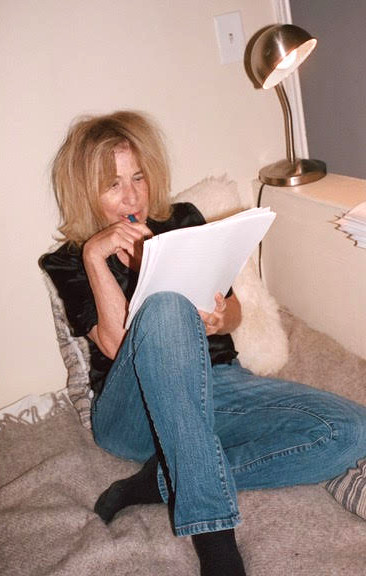
AV: But this is also very present in your book – you highlight, that the point of it is not to take your text and learn it chapter by chapter, but rather to study the examples, which you selected and placed carefully in the book, to take your advice and learn to notice the patterns in your own art writing, which prevent it from becoming actually great.
GW: Yes, patterns of weak writing. Nobody wants to sound like that, because it’s impossible to pay attention to it. The art world pretends mostly to be producing art, and then texts to go alongside it. And it’s really not true – we produce as much text as art, we are a text-producing industry. Go to any art bookshop, if you don’t believe me – we generate a lot of text, just as business, technology and science also produce mountains of words. But we still pretend that really we make art, and the text is alongside it, but I don’t think it’s actually true. An artwork cannot exist in the world without some text to support it, in one way or another. That may be changing for the Instagram generation,which is basically just pictures and few words. But certainly, if you are going to try and sell the thing, or even try to get any critical response – an artwork actually dies without a text frame, like it never existed.
AV: So you don’t really believe in this argument, that some things are just beyond the frame of language system, that some phenomena cannot be explained with words?
GW: It is very difficult then for art to enter any kind of discourse. And that is an issue for the artists, who are interested in working outside language – they are many. But, you know, there might be a kind of writing which is better suited to talking about artworks which are wilfully resisting language. Artists should do whatever they want.
AV: One last question to finish our conversation – what would be your tips for making a great interview? What should I learn until the next time?
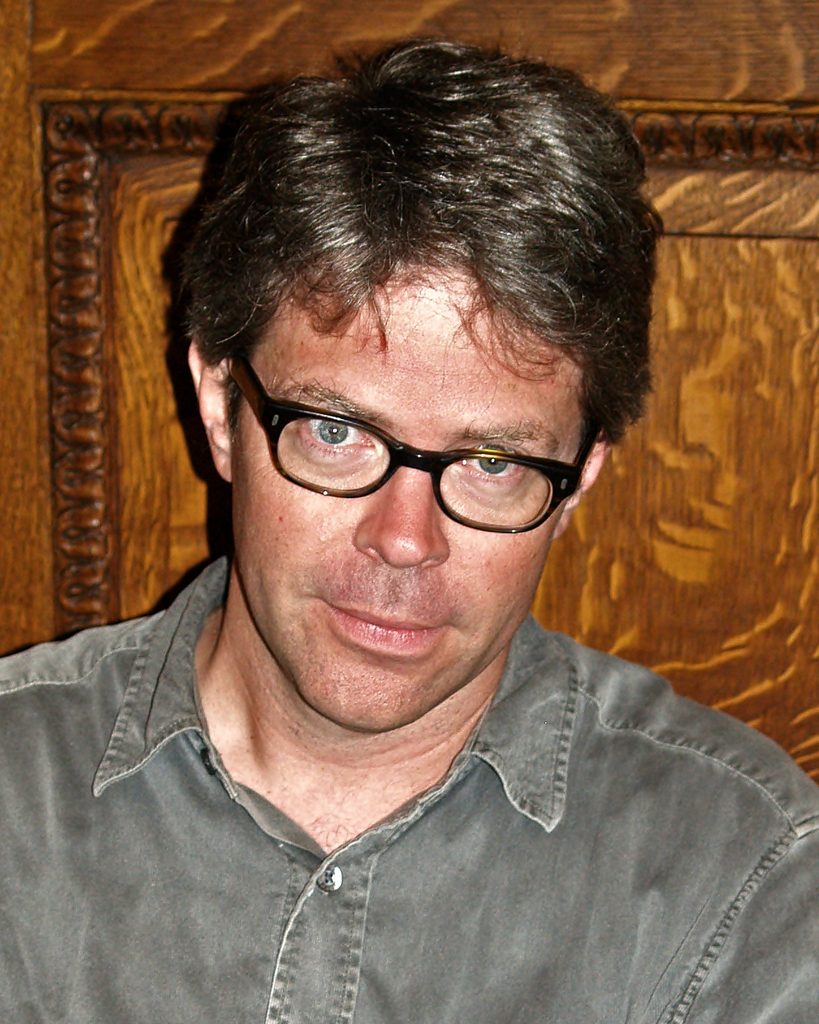
GW: Oh, ok! You ask your most important and original question – the thing you really want to know – you ask that first. You don’t get there, you start there. And that’s it – the rest was good! Ah, and also, usually when I do interview with an artist, or an author, I have a list of the titles of all the work they’ve ever made, with dates. I never sit there saying “Remember that purple thing you did in the 90s?” (both laughing). All the key info – titles, dates, places – is on one piece of paper, and then I list my questions – very short – but I don’t really follow the order of my questions, just like you did, which is good. Let the conversation follow its own course, and pluck out the question you’ve prepared that fits the flow, or modify it, or invent a new question on the spot, of course. I’ve just remembered another thing, Jonathen Franzen’s book Freedom (2010),which is wonderful novel, a love-triangle, and one of the points of the triangle is Richard, a punk rocker. In the book he gets interviewed by an extremely inexperienced journalist. So he, Richard, twists every question, generously finds the kernel of an interesting thought in each dumb question,and turns the interview around in his favor. I have my students read that as a lesson in how not to conduct an interview. It is also very, very funny and well-written.
AV: Thank you so much for your time!
GW: It was fun! A pleasure.
Alberta Vengrytė Vilnius Academy of Arts, Art History and Theory deptMA Art History & Theory Project Coordinator and Freelance Art Critic