Main Cast
Scott Sublett
People chatter endlessly about how art has the power to change the world but it seldom happens and when it does it’s often not for the better. Triumph of the Will had a cult following, but not a cult one wanted to encourage. So, now that it’s 50, let’s finally recognize that The Rocky Horror Picture Show is the most culturally influential movie musical in the history of the medium. No other film has incited its audience to respond with a performance piece that in turn spawned a subculture. In thousands of midnight screenings across the English-speaking world, that cult provided a sense of acceptance and ‘found family’ that generations of queers and other misfits weren’t getting at home. The grassroots, ritualized performance art comforted and healed the tribe it created. In its melding of film, site-specific theatre, fan participation, and fan creation, “Rocky” becomes something new: a hybrid art form, the way Braque, Picasso, and Rauschenberg abolished boundaries between painting and sculpture.
It was so democratic. A flop when released in 1975, the midnight screenings commenced in 1976. Throughout the English-speaking world, thousands of spectators became artistic collaborators, and The Rocky Horror Picture Show became not just a movie that mashed up and upended genres (sci-fi, bedroom farce, the musical, queer cinema, intentional camp, horror) but something much greater than the footnote that the guardians of the cinema canon have consigned it to: ‘Just a cult movie,’ as if a film inspiring a subculture that lasts 50 years were a ho-hum, everyday thing. In fact, an audience that creates a work of art that interacts with the existing work of art right there in the theater has no parallel in the history of Western cinema. Yet Mast and Kawin’s 770-page A Short History of the Movies mentions it exactly once, buried in a list of midnight movies, and it’s rarely assigned in classes that cover the history of the genre. If it weren’t so queer, would that be so?
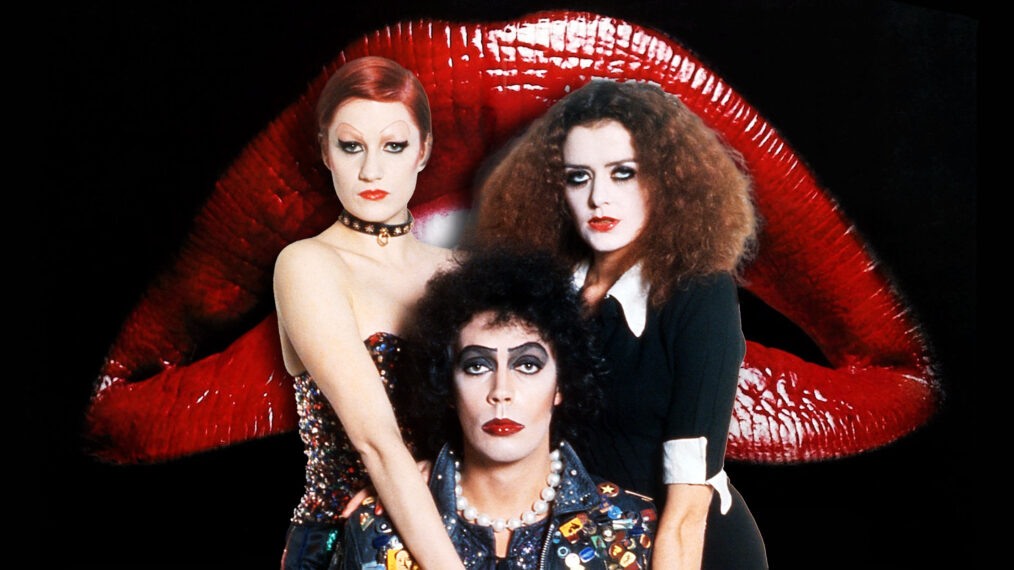
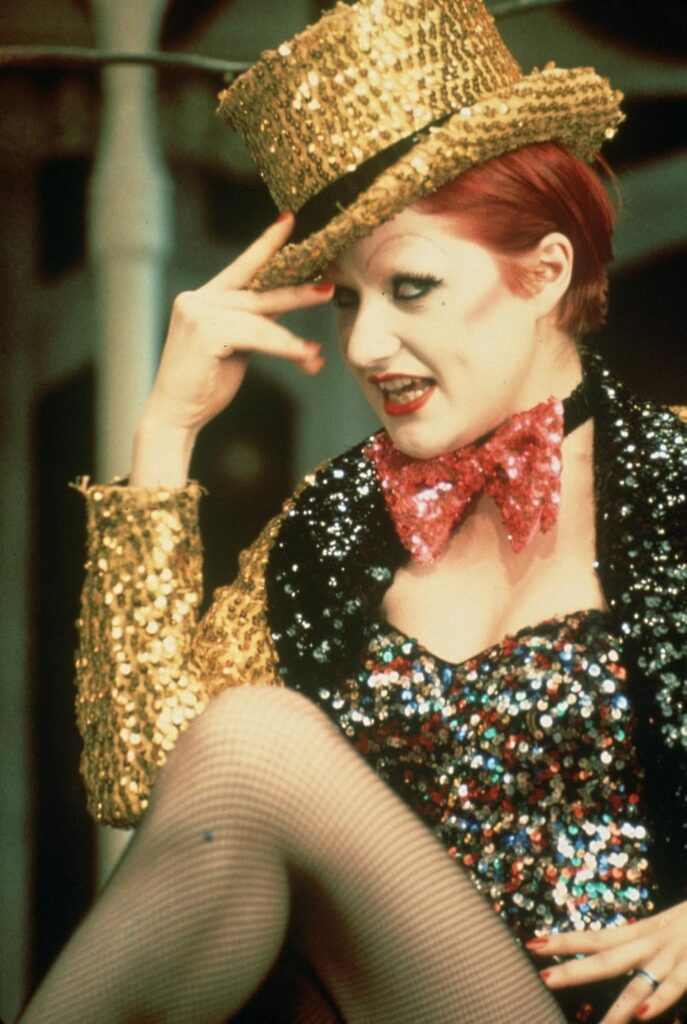
Even before we get to its cultural afterlife, the film holds up. Judged strictly from the point of view of cinema for cinema’s sake, while not the movie-musical genre’s most exquisitely crafted achievement, it’s a surprisingly better film than it gets credit for being and maybe the finest low-budget musical ever made. The rock score is great—Time Warp, Touch-a, Touch-a, Touch-a Touch Me, and Hot Patootie—Bless My Soul I Really Love That Rock ’n’ Roll, are particular earworms (try to get Time Warp out of your head now—go on), with smart, zingy lyrics. The comic characters are sharply drawn and the superb cast lands the punchlines decisively. Even the cheap costumes (designer Sue Blane was given a budget of $1,600—more than she had for the original London stage production) are hard to forget. Brad in his high-waisted tighty-whities is better than a million bugle beads. On a tiny budget of $1.2 million, the film achieved a noteworthy degree of sleazy spectacle. Sure, Singin’ in the Rain and On the Town are Olympian works of artistic perfection and represent the classical apex of the many crafts that add up to that most complex cinematic form the movie musical, but not many people will say of any of the great MGM Golden Age musicals, “That movie changed my life.”
Many of the writers in the new book Absolute Pleasure: Queer Perspectives on Rocky Horror, edited by Magot Atwell and published to coincide with the 50th anniversary of the movie, say precisely that. Most of the 26 essays that compose the book are miniature memoirs that intertwine personal coming-out stories with the discovery of the ‘Rocky Horror’ cult. The writers tend to be much younger than the artists and fans who actually created ‘Rocky Horror,’ and on one hand the reader is struck by how hard being queer still is, and on the other by how much easier. The young essayists grew up in a world where the heavy lifting of liberation had been done by earlier generations of gays. Their high schools sometimes had gay-straight alliances, and Modern Family and Glee were on TV. Quite a few of them were turned on to the movie by a parent. One of them was in a 2010 high-school production of the play. My school did Oklahoma.
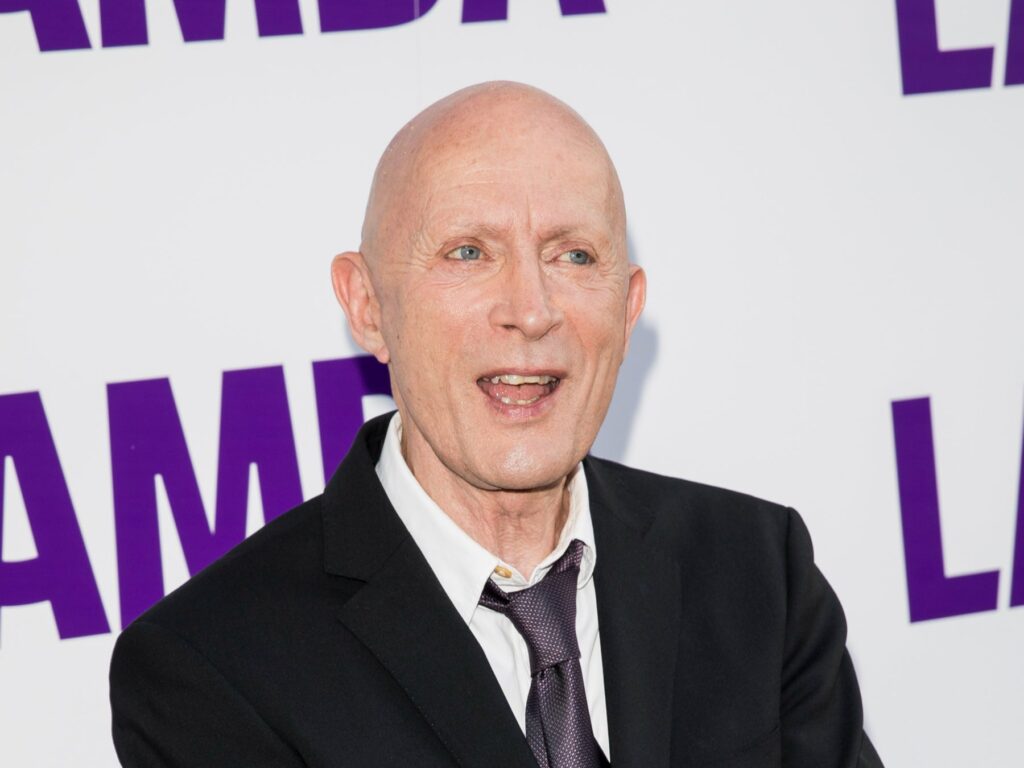
A few of them, while still asserting that they’re Rocky’s biggest fans, can’t resist condemning the ‘problematic’ (what a passive-aggressive word) aspects of the film. Brad and Janet’s seductions by the flimsily disguised Dr. Frank-N-Furter, for example, are called out as ‘ambiguous consent.’ In fact, Janet in the end consents pretty explicitly, and Brad, despite his cis-manly hunkiness, doesn’t exactly punch Frank-N-Furter on the nose. “You promise you won’t tell” sounds like consent to me. Then there’s the “ableism” of Dr. von Scott when, in the magical Floor Show number where they sing Don’t Dream It, Be It, he discovers that under his lap robe he’s wearing spiked heels and starts performing high kicks. I bet Tim Curry, who played Frank-N-Furter and who in 2012, while getting a massage, succumbed to a stroke and has been in a wheelchair ever since, would like to do some high kicks in high heels. The silliest objection of all is to the audience callback Sieg Heil”whenever anyone mentions Dr. “von” Scott, which we learn causes harm to people who have to hear that. Does the writer think real Nazis from a 1923 Munich beer hall have been teleported into a midnight movie screening to shout propaganda? Rocket scientist Wernher “von” Braun was a member of the Nazi Party, held a commission in the SS, and directed the V-2 rocket program that used forced Jewish and queer labor from concentration camps. The U.S. erased von Braun’s Nazi past, then he and lots of other ex-Nazi scientists helped us land on the moon, and while landing on the moon is a good thing, Nazism is not. When the audience in the theatre calls out Sieg Heil, they aren’t hailing Hitler. They’re holding those scientists accountable. The tragic thing is not that the essayist doesn’t get the joke—it’s that the essayist doesn’t want to get the joke because it’s more fun to aggrandize oneself as the Defender of Others. As queers would have said around the time ‘Rocky Horror’ came out, “Oh, Mary, get over yourself.” In her foreword to the book, Carmen Maria Machado, lamenting modern charges that ‘Rocky Horror’ is “queerbaiting” (um, the whole thing was written by a queer, by the way), asked: “Is this where we have landed? Young people shoving the rich legacy of queer art out of the way in pursuit of some imaginary perfect text?” I’d go further and say that it’s perfect as it is. Sanitizing it would kill the Halloweenish, let-the-demons-out-and-be-damned catharsis.
Amid the film’s ‘imperfections’—its anarchy, chaos, transgressiveness, and most of all its ambiguity and self-contradiction—the hardest thing to pin down is Dr. Frank-N-Furter. He’s a “sweet transvestite / from Transexual / Transylvania,” but like sex itself, sexual identity is messy and fluid. What would we call Dr. Frank-N-Furter today? In 1975 everyday usage, ‘transvestite’ usually meant a heterosexual man who derived erotic or psychological satisfaction from wearing women’s clothing, and that’s not Frank-N-Furter. Whether Frank is transsexual is certainly his to decide, but he doesn’t seem to have had any top surgery. If he’s a drag queen, well, he doesn’t tuck and drag queens generally want to look pretty—albeit exaggeratedly or even parodistically so. One is left to conclude that the lyric Sweet transvestite / from Transexual / Transylvania was chosen for the inevitable and unforgettable way those words hang together. As for labeling Frank, one of the more interesting essays in Absolute Pleasure, by Magdalene Visaggio, without using the diagnostic term, makes a good case for Frank as a portrait of narcissistic personality disorder. That would explain his inclination to treat others as objects and his ballsy charisma. Let’s just say he’s a combination of what the plot needs him to be and what Richard O’Brien wanted him to be.
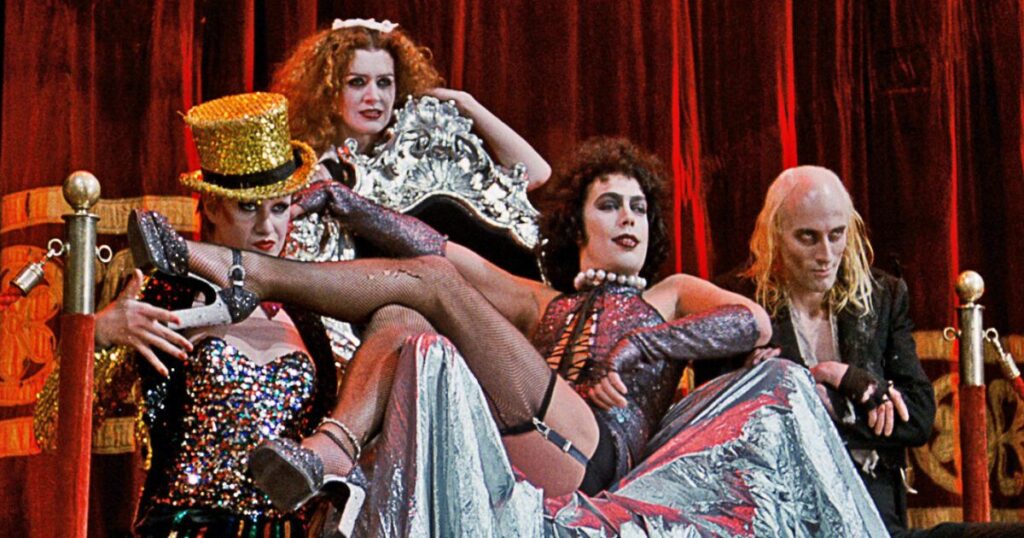
Now 83, O’Brien, the one-time unemployed thespian who wrote the book, lyrics, and score for the hit 1973 British stage musical The Rocky Horror Show, and played Riff Raff on stage and in the movie (as a composer, lyricist, librettist, actor, singer, and dancer, O’Brien is a sextuple threat), has a nuanced view of his own sexuality. A product of the mid-’60s Swinging London scene, he married three times, had a son with his first wife, a son and daughter with his second, and now has grandchildren. In 2012 he married for the third time. He also, at six years old, “horrified his older brother by expressing a desire to become a fairy princess,” and has described himself as transgender and third gender. In a 2013 interview, he related that he’d used oestrogen for the previous decade, and more recently told The Guardian that in addition to his trademark bald head, he shaves all over: “It feminises the body. All shaving is feminising. I wonder when men first started shaving their faces. That must have been an interesting point in time.”
O’Brien once said that his musical “was only meant to run three weeks.” The film adaptation is now half a century old. The stage play is even older. It opened at the 63-seat Royal Court Theatre Upstairs on June 19, 1973, caught on, moved to bigger houses, and eventually won the “Evening Standard” Theatre Award for Best Musical, and ran a lucrative 2,960 performances. When the play transferred to Broadway in 1975, it flopped. Yet it was New York City—specifically the midnight screenings at Manhattan’s Waverly Theater, concocted to eke out a bit of profit after the initial release flopped, that would grant Rocky Horror its immortality. One can still find midnight screenings in New York City, and a Broadway revival (reanimation?) is scheduled for March, directed by Sam Pinkleton (Oh, Mary), and starring out gay Welsh actor Luke Evans in the lead role originated by heterosexual, cisgender Tim Curry. In the words of Colin Clive as Dr. Henry Frankenstein in a very successful 1931 film: “It’s alive! It’s alive!” And arguably, because it still builds community for outsiders, it’s still saving lives. And that’s art with power.